> For the complete documentation index, see [llms.txt](https://docs.hyperswitch.io/llms.txt). Markdown versions of documentation pages are available by appending `.md` to page URLs; this page is available as [Markdown](https://docs.hyperswitch.io/integration-guide/workflows/intelligent-routing/routing-strategies/least-cost-routing.md).
# Least Cost Routing
Optimize debit payment cost by routing through the lowest-cost eligible network
Least Cost Routing helps merchants reduce debit payment cost by selecting the most cost-efficient eligible debit network for a transaction. It is focused on debit network choice, while [Multi-Objective Routing](/integration-guide/workflows/intelligent-routing/routing-strategies/multi-objective-routing.md) focuses on processor-level cost and auth-rate tradeoffs.
## Prerequisites
To use Least Cost Routing in Hyperswitch, confirm:
* Connectors that support local debit network routing are configured.
* Debit card support is enabled.
* One or more local debit networks are enabled in both connector and Hyperswitch dashboards.
* The payment has the debit card and network data required to identify eligible local networks.
## Setup
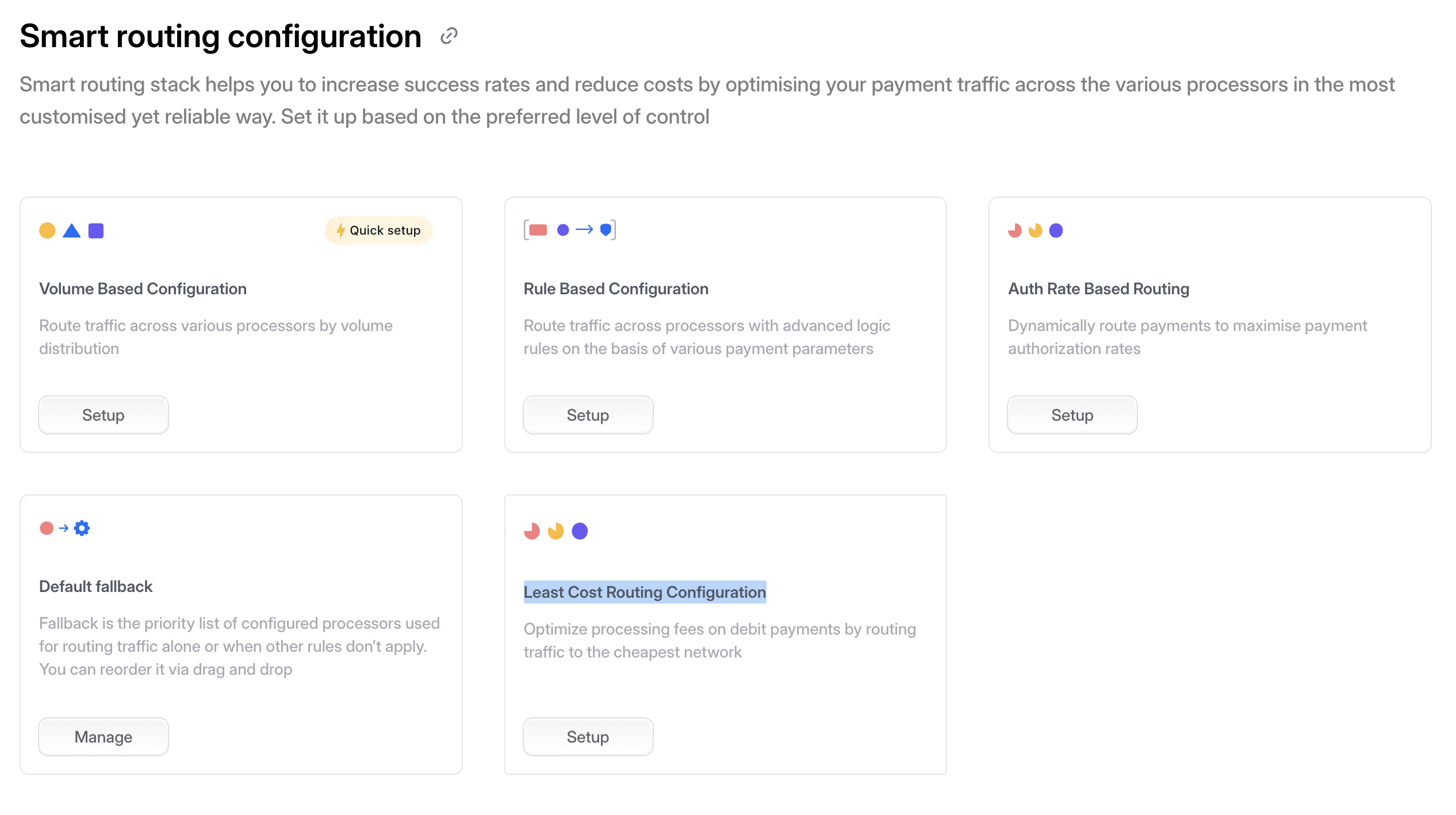
1. Go to `Workflow` > `Routing` > `Least Cost Routing`.
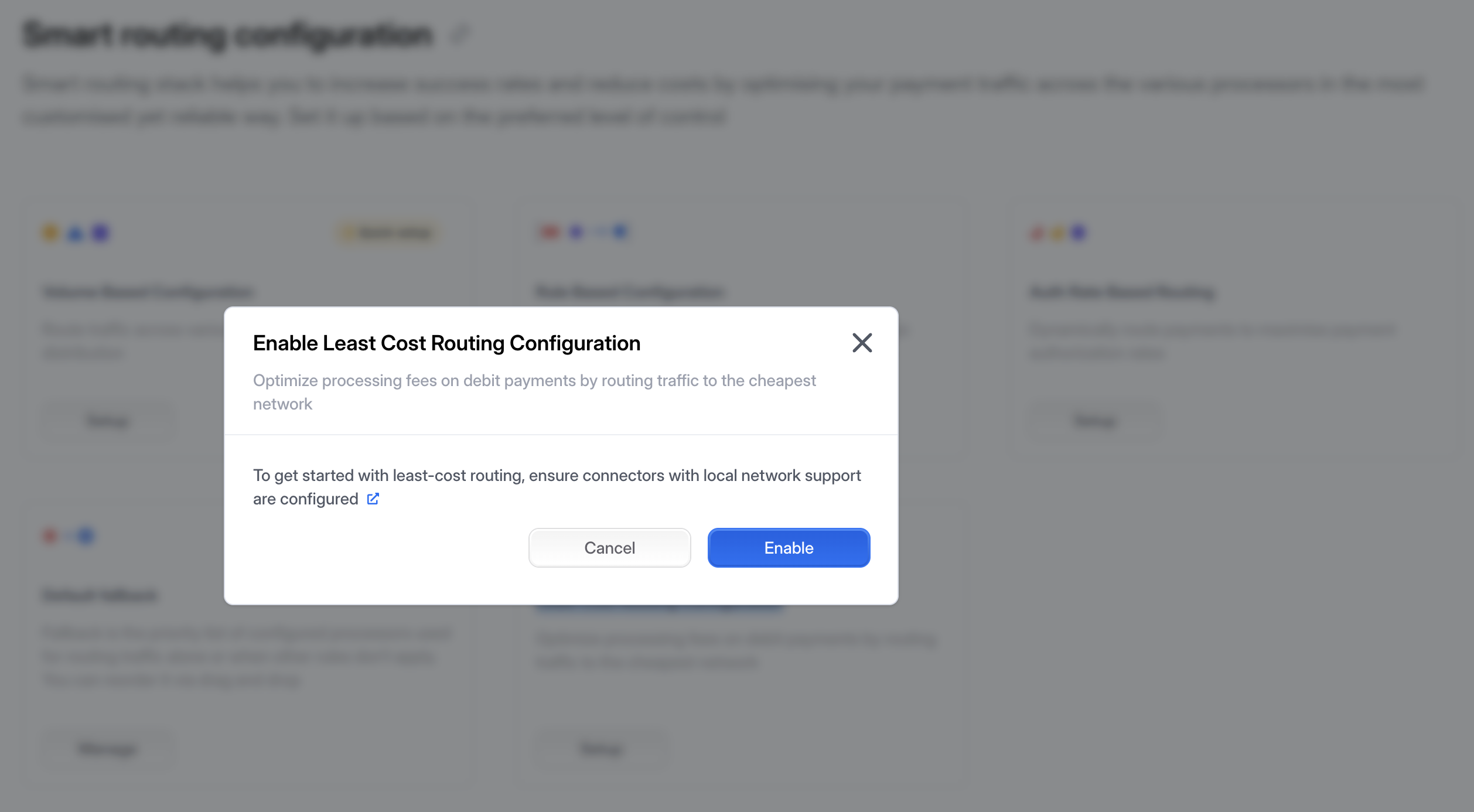
2. Confirm the connector setup, debit card enablement, and local network configuration prerequisites.
3. Click `Enable` to activate Least Cost Routing.
4. Review the active routing configuration in the Hyperswitch Dashboard.
## Supported Configuration
| Item | Supported values |
| -------------- | ------------------------ |
| Geography | US |
| Payment method | Cards |
| Networks | Star, Pulse, NYCE, Accel |
## How It Works
For supported debit card payments, Hyperswitch checks the available card networks and eligible connector capabilities. It compares eligible global and local debit networks and selects the network with the lowest estimated cost.
Least Cost Routing can run as a standalone debit network routing strategy or alongside auth-rate routing in a hybrid setup, where Hyperswitch keeps processor performance in view while also selecting the debit network.
## Cost Computation
Hyperswitch estimates transaction cost using payment attributes such as amount, issuer, network, acquirer country, and merchant category.
The cost computation considers:
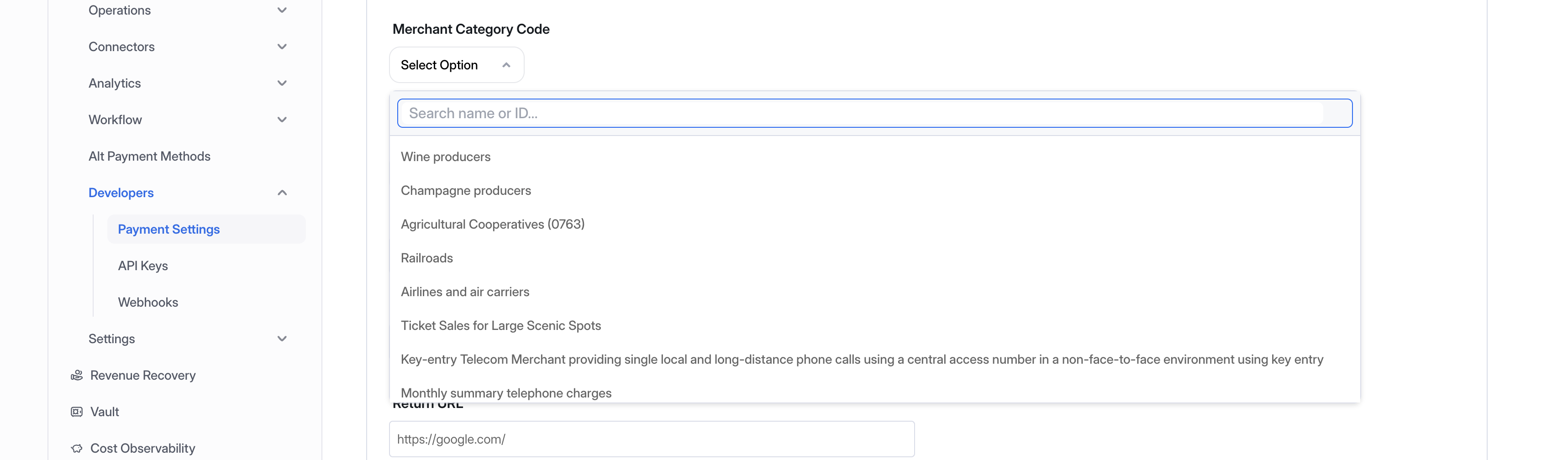
* MCC supplied by the merchant.
* Transaction amount.
* Card issuer bank.
* Co-badged card network data, when available.
* Global network and local network eligibility.
* Default cost values available in Hyperswitch when merchant-specific cost data is not available.
* Merchant-provided PSP-network contracts where those inputs are available.
When supported by the processor, Hyperswitch passes the selected debit network in the payment request.
---
# Agent Instructions
This documentation is published with GitBook. GitBook is the documentation platform designed so that both humans and AI agents can read, navigate, and reason over technical content effectively. Learn more at gitbook.com.
## Querying This Documentation
If you need additional information that is not directly available in this page, you can query the documentation by asking a question.
Perform an HTTP GET request on the following URL with the `ask` and `goal` query parameters:
```
GET https://docs.hyperswitch.io/integration-guide/workflows/intelligent-routing/routing-strategies/least-cost-routing.md?ask=&goal=
```
`ask` is the immediate question: it should be specific, self-contained, and written in natural language.
`goal` is what the user is ultimately trying to achieve, the reason they need the answer. Sharing it helps GitBook give you a better, more relevant answer. A goal is most helpful when it describes the outcome the user wants rather than restating the question. For example, with `ask=how do I create an API token`, a goal like `automate deployments from our CI pipeline` lets GitBook tailor the answer to that use case.
The response will contain a direct answer to the question and relevant excerpts and sources from the documentation.
Use this mechanism when the answer is not explicitly present in the current page, you need clarification or additional context, or you want to retrieve related documentation sections.